
When I started college, nobody handed me a top insurance guide for college students. I figured it out the hard way, with a broken laptop, a trip to urgent care, and a parking lot fender bender all within my first semester. Insurance felt like something my parents handled. Until suddenly it wasn’t. If you’re heading to campus without a clear plan for coverage, you’re gambling with money you probably don’t have.
Why Insurance Matters More Than You Think in College
Most students assume they’re covered by their parents’ plans. Sometimes that’s true. Sometimes it’s dangerously wrong. Your parents’ homeowners insurance might cover your stuff in a dorm, but move into an off-campus apartment and that protection usually vanishes. Their health insurance might not cover you at a college 300 miles away, or it might come with out-of-network costs that make an ER visit financially devastating.
I watched a friend get hit with a $4,200 bill after a bike accident because her mom’s health plan didn’t have in-network providers anywhere near our campus. She spent months fighting it. Understanding your actual coverage gaps before you need to file a claim is one of the smartest financial moves you can make at 18 or 19 years old. It’s not glamorous, but neither is debt.

Health Insurance: Your Most Important Coverage
Health insurance isn’t optional. In fact, many colleges require proof of coverage before you can even register for classes. You typically have three paths here.
First, you can stay on your parent’s plan. The Affordable Care Act lets you remain on a parent’s health insurance until you turn 26, which is a huge benefit. But verify that doctors and hospitals near your campus are in-network. If your school is in another state, this step is critical.
Second, your college likely offers a Student Health Insurance Plan (SHIP). These plans are designed specifically for students at that campus, so local providers are almost always in-network. They tend to cost between $1,500 and $3,000 per year. If your parent’s plan has poor coverage in your college’s area, SHIP is usually the better call.
Third, if you’re financially independent, you can shop for your own plan through Healthcare.gov during open enrollment. Many students qualify for subsidies that bring monthly premiums down significantly.
What to Check Before You Choose
Call your parent’s insurance company and ask specifically about coverage in your college’s city. Ask about emergency room copays, mental health visits, and prescription coverage. Don’t just assume it works the same everywhere. I made that assumption and it cost me $800 for a single doctor visit.
Renters Insurance: Cheap Protection Most Students Skip
Here’s something that surprised me: renters insurance costs about $10 to $20 per month for most college students. That’s less than a streaming subscription. And it covers your laptop, phone, furniture, and clothes if they’re stolen, damaged in a fire, or ruined by water damage.
If you live in a dorm, check whether your parents’ homeowners or renters policy extends coverage to your belongings. Many do, but with limits. If you live off campus, you almost certainly need your own renters policy. Lemonade, State Farm, and USAA (if you have a military connection) all offer affordable student-friendly options.
Liability coverage is the hidden gem in a renters policy. If someone slips in your apartment and sues you, your renters insurance helps cover that. Sounds unlikely until it happens to someone you know.

Auto Insurance: Navigating Campus Car Rules
Bringing a car to campus? Your auto insurance situation gets interesting. If you’re on your parents’ policy and taking the car to school, you need to update the insurance company with your new garaging address. Failing to do this can give your insurer grounds to deny a claim. I know because it almost happened to my roommate after a parking garage scrape.
If you’re leaving the car at home and not driving regularly, ask about a “distant student” discount. Most major insurers, including Geico, Progressive, and Allstate, offer 10% to 25% off when a student is away at school without a car. Also ask about good student discounts, which typically require a 3.0 GPA or higher.
If you don’t bring a car but occasionally rent one or borrow a friend’s, look into whether your parents’ policy covers you as a driver of other vehicles. Many do, but not all. Knowing this before you grab a Zipcar on a weekend trip saves a lot of stress.
Laptop and Electronics Coverage: Worth a Second Look
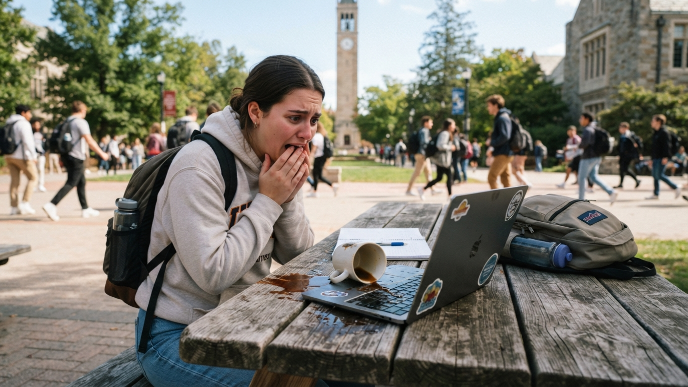
Your laptop is probably the most expensive thing you own in college. A renters insurance policy covers theft and certain types of damage, but it usually doesn’t cover you dropping it on the quad or spilling coffee on the keyboard.
For accidental damage protection, AppleCare+ or a similar manufacturer warranty makes sense if you own a MacBook or high-end Windows laptop. These plans run about $70 to $100 per year for a laptop and cover accidental drops and spills with a deductible.
Some credit cards also offer purchase protection or extended warranty benefits. If your parents bought your laptop with an American Express or Chase Sapphire card, check whether the card provides accidental damage coverage. Sometimes the best insurance is the kind you already have and don’t know about.
Travel Insurance: Only When It Makes Sense
If you’re studying abroad, travel insurance stops being optional. Your regular health insurance almost never covers you internationally. A good travel insurance policy covers medical emergencies, trip cancellation, lost luggage, and emergency evacuation.
World Nomads and IMG Global are popular choices among students studying abroad. Expect to pay $30 to $80 per month depending on your destination and coverage level. Your study abroad office will likely recommend specific providers too, so check with them before buying on your own.
For domestic travel during breaks, you usually don’t need separate travel insurance. Your regular health and auto coverage should handle most situations. But if you’re booking an expensive spring break trip, a cheap trip cancellation policy through your airline or a site like Allianz can protect that investment.
Life Insurance and Disability: Do College Students Need It?
Short answer: probably not. If nobody depends on your income, you don’t need life insurance yet. The exception is if you’ve co-signed loans with a parent. In that scenario, a small term life policy (around $10 to $15 per month) ensures your parent isn’t stuck with your debt if something terrible happens.
Disability insurance is similarly unnecessary for most college students. You’ll want it after graduation when you have a salary to protect, but right now, focus your limited budget on health, renters, and auto coverage. Those are the policies that actually prevent financial disasters during your college years.

How to Save Money on Insurance as a Student
The best way to save on insurance is to bundle and ask questions. Seriously, just asking saves money. Here’s what works.
- Bundle renters and auto insurance with the same company for a multi-policy discount, usually 5% to 15% off.
- Ask every insurer about student discounts, good grades discounts, and paperless billing discounts.
- Raise your deductibles if you have savings to cover a $500 or $1,000 out-of-pocket cost. This drops your premiums noticeably.
- Compare quotes from at least three companies before buying anything. Policygenius and The Zebra make this easy online.
- Review your coverage every year. Your needs change as you move off campus, get a car, or start an internship.
One thing I wish I’d done earlier was set a calendar reminder each August to review all my policies before the fall semester. Five minutes of checking saved me over $200 one year just by catching a duplicate coverage situation.
A Top Insurance Guide for College Students Covers the Gaps
The biggest mistake I see students make is assuming they’re fully covered when they’re actually not. A real top insurance guide for college students isn’t about buying every policy available. It’s about identifying the specific gaps in your current coverage and filling only those.
Talk to your parents about what their policies actually cover for you. Read the fine print on your student health plan. Check whether your dorm or apartment lease requires renters insurance. These conversations take an hour, maybe two. They can save you thousands.
Frequently Asked Questions
Does my parents’ health insurance cover me at college?
It depends on your college’s location and your parent’s plan network. You can stay on their plan until age 26 under the ACA, but if your school is far away or in another state, local doctors might be out of network. Call the insurance company and ask about coverage near your campus specifically.
Do I need renters insurance in a college dorm?
Your parents’ homeowners policy may extend to your dorm belongings, but check the limits and exclusions. If you live off campus, you almost certainly need your own renters policy. At $10 to $20 per month, it’s one of the cheapest forms of financial protection you can buy.
What’s the best insurance guide for college students on a tight budget?
Focus on health insurance first since it prevents the biggest financial hits. Add renters insurance next because it’s incredibly cheap. Only add auto insurance if you have a car on campus. Skip life and disability insurance unless you have co-signed loans or dependents. Prioritize by risk, not by fear.
Can I get a discount on auto insurance as a college student?
Yes. Most major insurers offer good student discounts for maintaining a 3.0 GPA or higher. You can also get a distant student discount if your car stays at home while you’re at school. Always ask your agent directly, because these discounts don’t always apply automatically.
Should I buy travel insurance for studying abroad?
Absolutely. Your domestic health insurance almost never covers you internationally, and a medical emergency abroad without insurance can cost tens of thousands of dollars. Travel policies from companies like World Nomads or IMG Global typically cost $30 to $80 per month and cover medical, cancellation, and evacuation.
Conclusion
Insurance isn’t exciting, but getting it right during college gives you a financial safety net when you’re least able to absorb a surprise bill. Figure out your gaps, fill them affordably, and check back once a year. What coverage question are you still trying to figure out?