
Figuring out the best insurance coverage options for new parents hit me like a freight train about three weeks before my daughter arrived. My wife and I sat on the couch surrounded by brochures, open browser tabs, and a growing sense of panic. Nobody tells you that the financial side of having a baby can feel just as intense as the sleepless nights. We learned a lot the hard way, and I want to save you that same stress.
Why Insurance Changes the Moment You Become a Parent
Having a baby is a qualifying life event. That means you get a special enrollment period, typically 30 to 60 days after your child’s birth, to update or change your health insurance plan outside of open enrollment. Miss that window and you could be stuck waiting months to add your newborn to your policy.
I almost blew this deadline. Our daughter was born on a Wednesday, and by the following Monday I was so sleep-deprived I forgot my own middle name. Thankfully, my wife set a phone reminder the day we came home from the hospital. Call your insurance provider or HR department within the first week. Seriously, put it on your calendar right now if you are expecting.
Your old coverage, the plan that worked perfectly fine when it was just the two of you, probably has gaps now. Pediatric visits, vaccinations, potential NICU stays, these things add up fast. You need to rethink what “good enough” actually means.

1. Comprehensive Health Insurance
This is the big one, the foundation everything else sits on. A solid health insurance plan covers prenatal care, delivery, postpartum checkups, and all of your baby’s wellness visits in the first year.
If your employer offers multiple tiers, compare the monthly premium against the out-of-pocket maximum. We switched from a low-premium, high-deductible plan to a mid-tier PPO through my wife’s employer, and it saved us roughly $4,000 on delivery costs alone. Plans through the Health Insurance Marketplace at healthcare.gov are also worth comparing, especially if you are self-employed or your employer’s family plan is too expensive.
Look closely at whether the plan covers lactation consultants, postpartum mental health visits, and pediatric specialists. These are the things that matter enormously in year one but often hide in the fine print.
2. Term Life Insurance
Nobody wants to think about this. I get it. But becoming a parent is the single biggest reason people buy life insurance, and term life is the most affordable way to do it.
A 20-year or 30-year term policy gives your family a financial safety net if something happens to you. Companies like Haven Life, Ladder, and Bestow let you apply entirely online, and healthy adults in their 20s or 30s can often lock in $500,000 of coverage for $25 to $40 per month. Both parents should have a policy, not just the higher earner.
I bought mine through Ladder about six weeks before our due date. The whole process took 20 minutes and I didn’t need a medical exam. That peace of mind is worth every penny, and honestly, it is one of the best insurance coverage options for new parents because it protects everything you are building.
3. Disability Insurance
Here is the coverage almost everyone overlooks. If you cannot work due to injury or illness, disability insurance replaces a portion of your income, usually 50% to 70%.
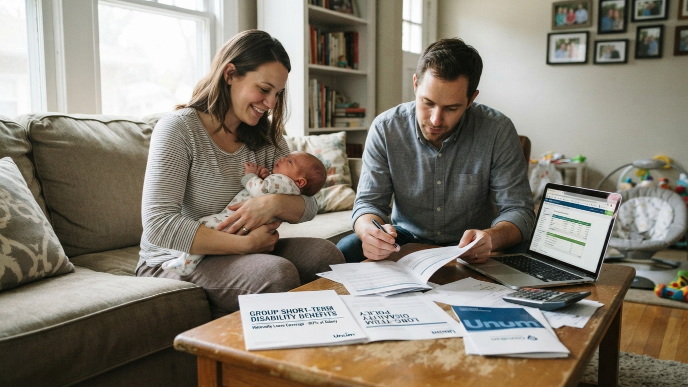
Short-term disability is especially relevant for birth mothers. Many policies cover a portion of maternity leave, typically six weeks for a vaginal delivery and eight weeks for a C-section. My wife’s employer-sponsored short-term disability plan covered 60% of her salary during her leave, and we had budgeted around that number months in advance.
Long-term disability matters for both parents. If the primary earner is sidelined for months or years, the financial impact on a young family is devastating. Check whether your employer offers group disability coverage, it is usually much cheaper than buying an individual policy. Unum and Guardian are two of the bigger names in this space.
4. Umbrella Insurance
Once you have a child, your overall liability exposure goes up. An umbrella policy provides extra liability coverage beyond what your auto and homeowner’s or renter’s insurance already offers.
For example, if someone gets injured at your home during a birthday party and sues you, your homeowner’s policy might max out at $300,000. An umbrella policy picks up where that limit ends, often covering an additional $1 million or more. Premiums typically run $150 to $300 per year for that first million in coverage, which is surprisingly affordable.
We added ours through the same company that handles our auto insurance, State Farm, and bundling saved us a small discount. It is the kind of policy you hope you never need, but you will be incredibly grateful to have if something unexpected happens.
5. Vision and Dental Plans for Your Child
Pediatric dental and vision coverage is technically required under ACA-compliant health plans, but the quality and depth of that coverage varies wildly. Some marketplace plans include it automatically while others offer it as a standalone add-on.
Our daughter needed her first dental visit by age one, per our pediatrician’s recommendation. Without decent dental coverage, even a basic cleaning and exam for a toddler can cost $150 to $200 out of pocket. Vision screenings start early too, especially if there is a family history of eye problems.
If your health plan’s pediatric dental and vision benefits feel thin, standalone plans through companies like Delta Dental or VSP can fill the gap for $20 to $50 per month. Compare the coverage limits carefully, some plans cap annual benefits at just $1,000, which disappears fast if your child needs anything beyond routine care.
6. Critical Illness Insurance
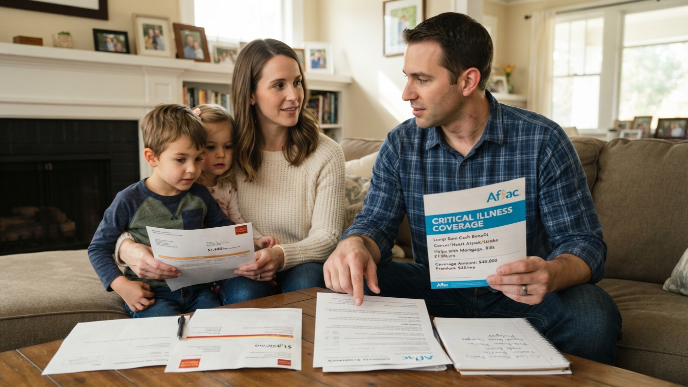
This type of policy pays a lump sum if you are diagnosed with a covered serious illness like cancer, a heart attack, or a stroke. It is not a replacement for health insurance. Think of it as a financial cushion that covers everything your medical plan does not, like mortgage payments, childcare, and everyday expenses while you focus on recovery.
Aflac and Colonial Life are two popular providers in this space. Premiums depend on your age and health, but younger parents can often get $25,000 to $50,000 in coverage for under $50 per month. My brother-in-law was diagnosed with thyroid cancer at 34, and his critical illness policy covered three months of mortgage payments while he was in treatment. That experience convinced me to add this to our own coverage.
How to Decide Which Policies You Actually Need
Not every family needs all six of these. Your budget, your employer’s benefits, and your personal risk tolerance should guide your decisions. Here is how I prioritized as a new parent.
Health insurance is non-negotiable. Your baby will see a doctor constantly in the first year, we had over a dozen appointments between wellness visits, a mild case of jaundice, and an ear infection. Term life insurance should come next if anyone depends on your income. After that, disability insurance fills the gap between what you earn and what you would receive if you could not work.
Umbrella insurance, critical illness, and enhanced dental or vision coverage are layer-two priorities. They are smart additions once your budget allows, but they should not come at the expense of adequate health and life coverage.
One thing I wish I had done earlier: sit down with an independent insurance agent. Not someone who sells for one company, but a broker who can shop multiple carriers on your behalf. It costs you nothing in most cases because they earn commission from the insurer, and they can spot gaps you might miss on your own.
Common Mistakes New Parents Make with Insurance
Plenty of new parents rush through insurance decisions or ignore them entirely. I nearly made a few of these mistakes myself.
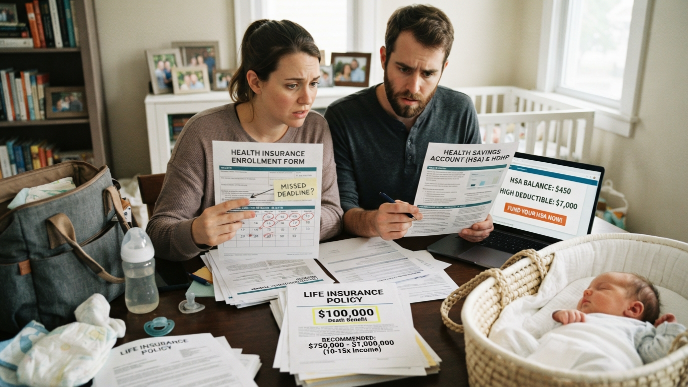
Forgetting to add the baby to your health plan within the special enrollment window is the most common one. If you miss the deadline, your newborn could go weeks or months without coverage, and retroactive enrollment is not always guaranteed.
Another mistake is keeping a high-deductible health plan without funding a Health Savings Account. If you stick with an HDHP, contribute to your HSA aggressively so you have cash ready for copays, prescriptions, and unexpected visits. The triple tax advantage of an HSA makes it one of the smartest financial tools for families.
Underinsuring on life insurance is also a big one. A $100,000 term policy sounds like a lot until you factor in years of lost income, childcare costs, and a mortgage. Financial planners generally recommend coverage equal to 10 to 15 times your annual income.
FAQs
When should new parents start shopping for insurance?
Start at least two to three months before your due date. That gives you time to compare plans, consult a broker if needed, and avoid making rushed decisions while sleep-deprived. If you already have the baby, move fast since your special enrollment period only lasts 30 to 60 days depending on your plan or marketplace rules.
What are the best insurance coverage options for new parents on a tight budget?
Focus on two things first: solid health insurance and a term life policy. These two cover the biggest financial risks your family faces. A 20-year term life policy for a healthy 30-year-old can cost under $30 per month. Everything else, umbrella, critical illness, enhanced dental, can wait until your budget has more room.
Does my baby automatically get added to my health insurance?
No. You need to actively enroll your newborn by contacting your insurer or HR department. A birth triggers a qualifying life event, but enrollment is not automatic. Gather your baby’s birth certificate and Social Security number as soon as possible to avoid delays in processing.
Is life insurance really necessary if both parents work?
Yes, absolutely. Even if both parents earn income, losing one salary would dramatically change your family’s financial situation. Childcare costs alone can exceed $1,000 per month in many areas. Both parents should carry individual term life policies sized to cover years of income replacement, debt, and future expenses like education.
Can I use an HSA to pay for my baby’s medical expenses?
You can, as long as you are enrolled in a qualifying high-deductible health plan. HSA funds cover copays, prescriptions, and a wide range of medical expenses for any dependent on your tax return. The money rolls over year to year and grows tax-free, making it a powerful tool for managing ongoing healthcare costs.
Conclusion
Becoming a parent rewires your brain in a hundred ways, and how you think about money and risk is near the top of that list. Getting the right coverage in place before the chaos of newborn life kicks in is one of the best things you can do for your family. What insurance decision are you wrestling with right now?